


Hello friends! Every Bollywood film has its own magic, but some movies don’t just entertain—they hold a mirror to society. Haq is one such film, releasing on November 7, 2025. Starring Yami Gautam and Imran Hashmi in lead roles, it is inspired by the landmark 1985 Shah Bano Case. This case isn’t just a symbol of the fight for women’s rights—it also sparked debates on religion, law, and secularism.
If you’ve seen the trailer, the courtroom drama, emotional struggle, and the line “My right!” must have shaken you. But did you know it’s all based on real life? In today’s blog, we’ll dive into the true story of the Shah Bano Case—the foundation of the script shared earlier. Let’s break it down step by step!
Who Was Shah Bano? – The Backstory

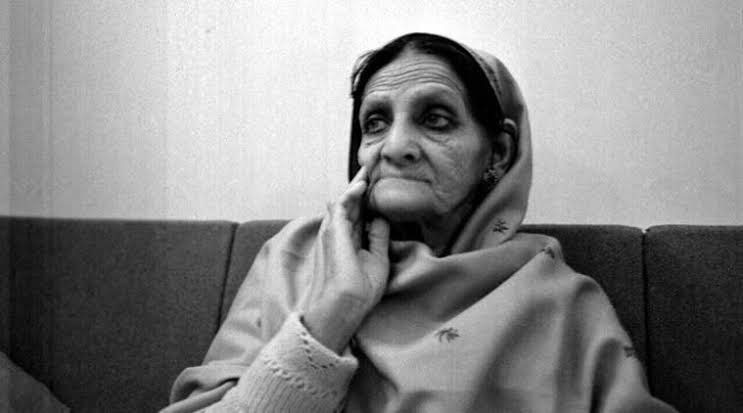
Shah Bano Begum was born in 1916 in Indore, Madhya Pradesh. In 1932, at just 16, she married renowned lawyer Mohammed Ahmed Khan. They had 5 children—3 sons and 2 daughters. 14 years into the marriage, in 1946, Ahmed Khan took a second wife (permitted under Muslim Personal Law). Both wives lived together until 1978, when everything changed.
Shah Bano was 62 years old. Ahmed Khan threw her and the children out. He gave her triple talaq (irrevocable divorce) and promised only ₹200 monthly maintenance, which he stopped in April 1978. Shah Bano was left in poverty—hungry, helpless, but refusing to give up. She decided: “I want my right!”
The Case Begins: Knocking on the Court’s Door
Shah Bano filed a petition in the local Indore court under Section 125 of the Code of Criminal Procedure (CrPC). This section states that no husband can leave his wife or children destitute, regardless of divorce. It applies to every Indian citizen, irrespective of religion.
Local Court Verdict: In favor of Shah Bano.
Ahmed’s Appeal: Went to High Court, but the High Court upheld the maintenance.
Supreme Court Stage: The case reached the Supreme Court by 1985. A 7-year legal battle!
The Historic Supreme Court Verdict – April 23, 1985

A bench led by Chief Justice Y.V. Chandrachud, along with Justices D.P. Madon and Ranganath Misra, ruled in Shah Bano’s favor. Key points:
Right to Maintenance: Section 125 grants lifelong maintenance to a divorced woman if she cannot support herself. Muslim Personal Law limits it to the iddat period (3 months), but the court ruled: Secular law overrides personal law.
Reference to Quran: The court even cited the Quran, which speaks of providing for a divorced wife.
Amount: Shah Bano was awarded ₹179.20 monthly (adjusted for inflation at the time).
Big Message: The court recommended a Uniform Civil Code (UCC) (under Article 44 of the Constitution) so that one law applies to all religions. Shah Bano herself said: “I am an Indian Muslim—adopt secular law.”
This wasn’t just Shah Bano’s victory—it was a precedent for women across India. But…
The Storm of Controversy: What Did Politics Do?

The verdict shook the nation. Muslim organizations (like AIMPLB) cried: “This is interference in Islam!” Protests erupted, and the UCC debate exploded. Then-PM Rajiv Gandhi’s Congress government faced vote-bank pressure. The result?
In 1986, the Muslim Women (Protection of Rights on Divorce) Act was passed. It overrode the Supreme Court verdict, limiting maintenance to the iddat period only.
Shah Bano was pressured to withdraw her case.
The judgment fell victim to political maneuvering, but Shah Bano’s voice could not be silenced. She passed away in 1992, but her legacy lives on.
Connection to the Film Haq: From Real to Reel
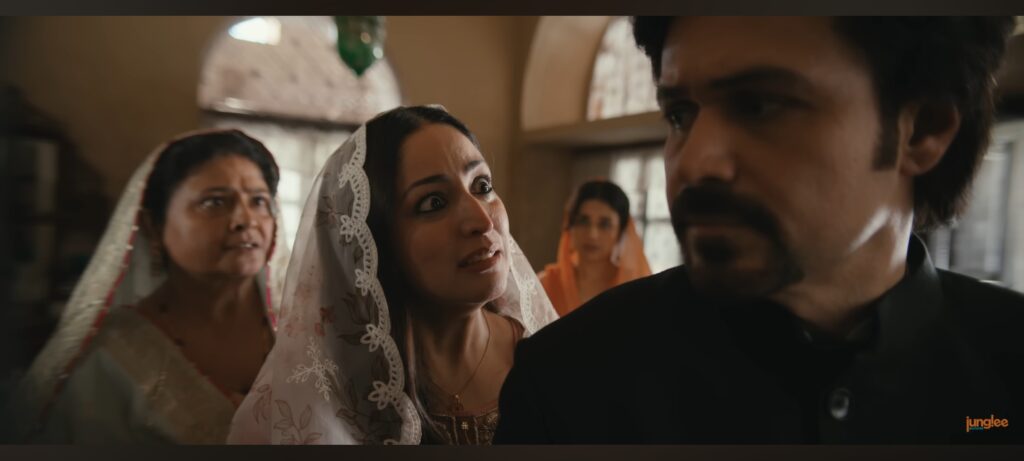
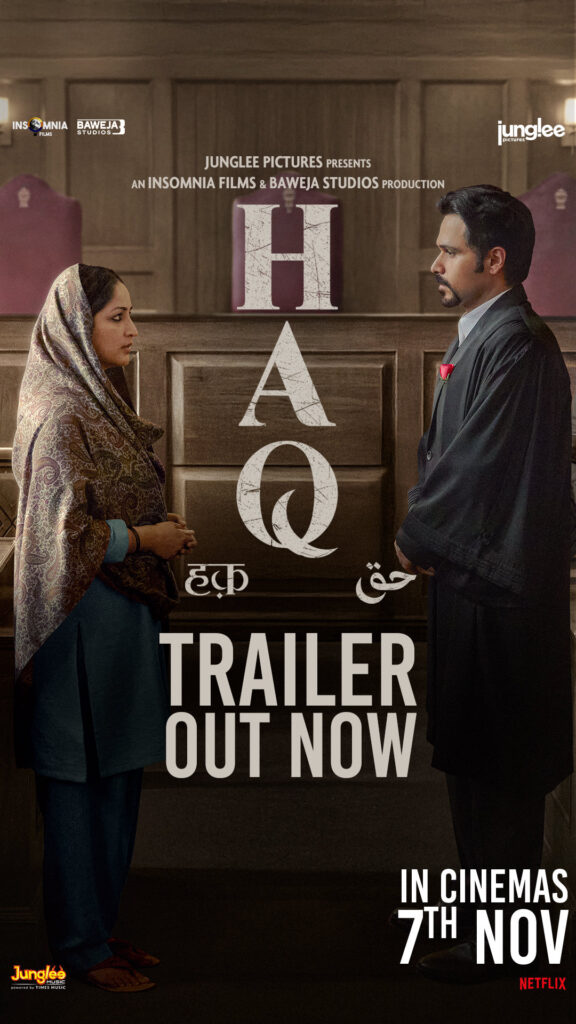
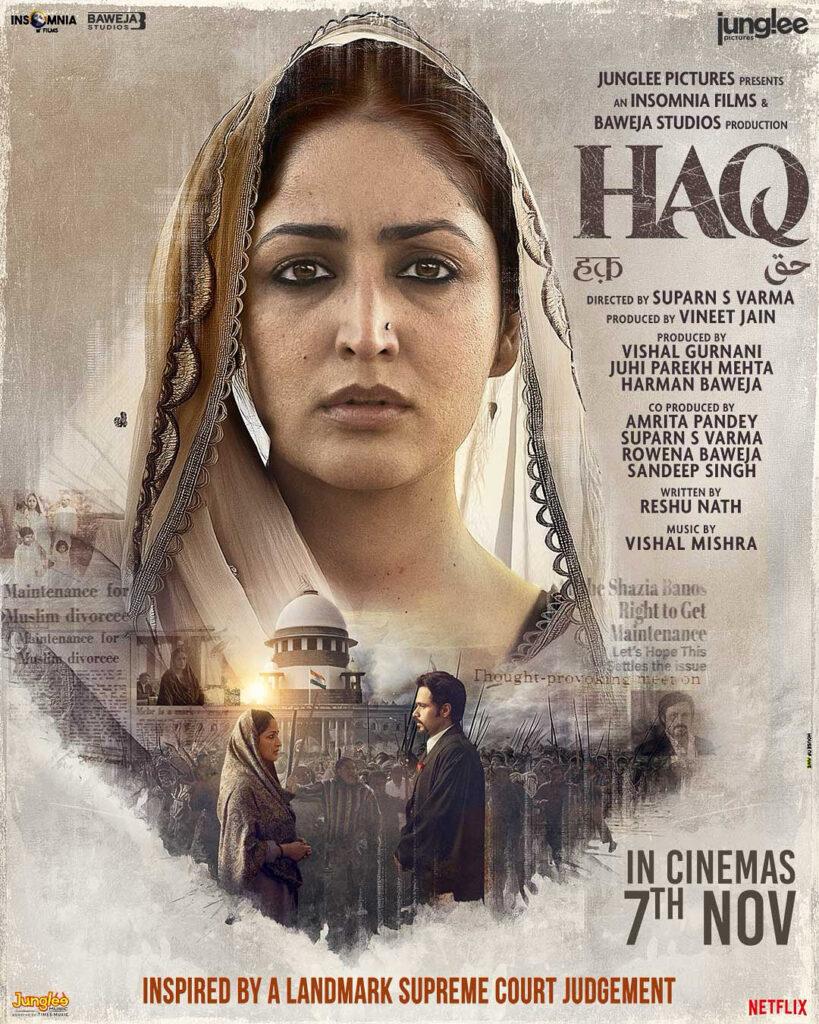
The film Haq tells this true story in a fictionalized way. Yami Gautam plays Shazia Bano (based on Shah Bano)—a woman who stands in court and declares: “We are Shazia Bano—our fight is only for our right!” Imran Hashmi plays her husband Abbas (based on Ahmed Khan).
Director Suparn S. Verma drew inspiration from Jigna Vora’s book Bano: Bharat Ki Beti. This courtroom drama touches on family struggle, societal pressure, and women’s rights. The intense trailer scene—tears in the eyes, fire in the voice—feels straight out of the real case.
Relevance Today: Shah Bano’s Legacy

The Shah Bano case paved the way for the 2017 Shayara Bano case, which banned triple talaq. The UCC debate is heating up again.
This case proves: One woman’s courage can change laws.
Are you ready? Head to theaters on November 7 to watch Haq, and remember—this isn’t just a movie, it’s a true story.
#HaqMovie #ShahBanoCase #YamiGautam #WomensRights #Bollywood2025 #RealStory